Rare Answer Strategy for Rarest Answer Party
Skip the first obvious word, build niche category banks, and outscore six-player lobbies on purpose.
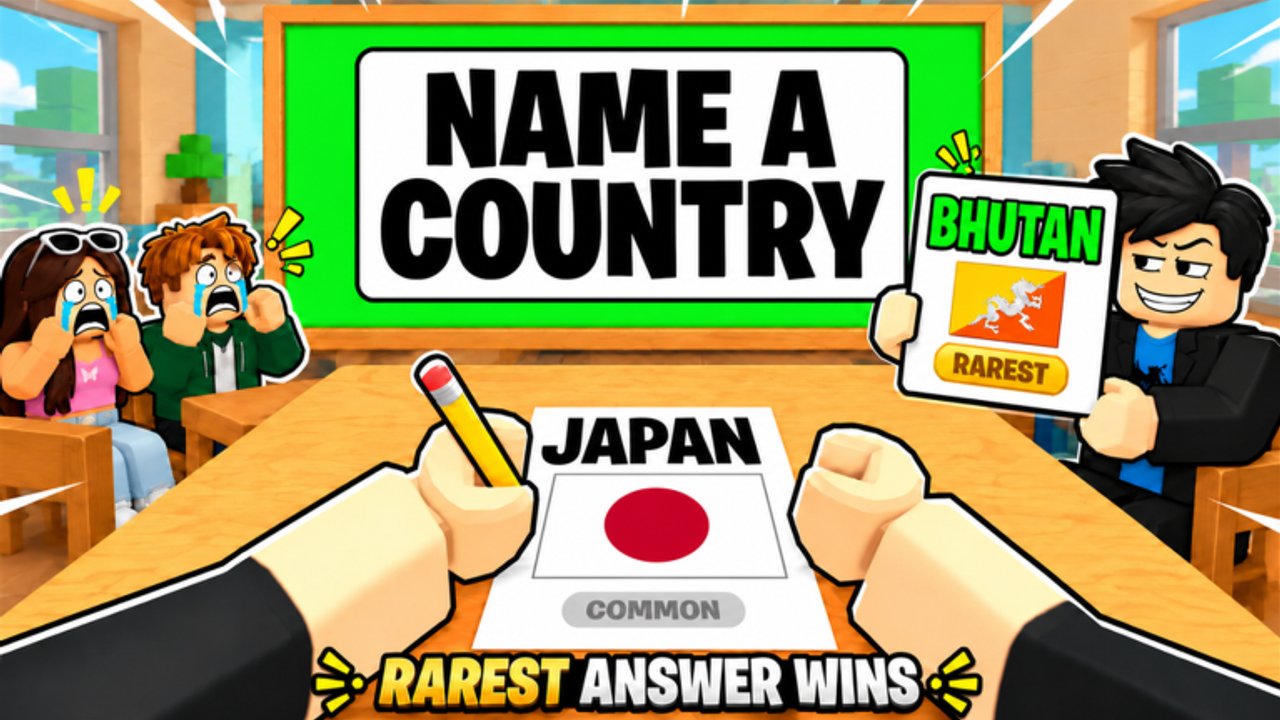
Winning Rarest Answer Party! is less about being the fastest trivia bot and more about predicting the crowd. Torrey Pines designed a six-player Roblox party quiz where rarer accepted answers score more points. If you still open every prompt by typing the first word in your head, you will keep tying with half the lobby. This guide teaches a repeatable rare-answer process, builds starter category banks, and shows how difficulty and tools pages fit the habit. Pair it with Getting Started if you need the basic join-to-score loop first, and How Scoring Works if rarity versus validity still feels fuzzy. Concrete starter lists live on Answer Ideas.
Remember the boundaries: answers must still fit the prompt, nonsense does not win, cosmetics never change scoring, and this is not “Rarest Answer Wins.” After the November 2026 Rarity Scoring Revamp, more than 100,000 newly accepted answers and a report feature changed which niche picks actually count—keep refining your banks when Updates land.
The core rare-answer loop
Use the same four beats every round:
- Read the prompt category carefully (animal, food, place, job, object, name, and so on).
- Name the obvious answer silently—the word most people will share.
- Step one niche sideways to a less common but clearly valid option.
- Submit with time to spare so you are not forced back into the obvious pick under panic.
That sideways step is the entire skill. You are not hunting random letters. You are hunting low-overlap vocabulary that the scoring system still accepts.
Why the first obvious answer loses
In a six-player server, shared answers are expensive. If four people type “pizza” for a food prompt, that cluster earns almost nothing. The player who typed a regional dish or less common ingredient often pulls ahead even without being obscure to the point of rejection. Train yourself to treat the first idea as a trap, not a gift. Say it in your head, then reject it on purpose unless the timer is about to die and you have no backup.
Public Easy lobbies punish this less because more players still spam basics. Hard lobbies punish it harder because more players already know the trap. See Difficulty Modes for how lobby feel changes your risk tolerance.
Build category banks, not one giant list
Memorizing thousands of one-off answers fails under timer pressure. Build small banks per category you can recall in two seconds. Expand them after each session. A practical starter set:
Animals
Skip dog, cat, lion, tiger. Prefer distinctive species that still feel fair: okapi, pangolin, quokka, saiga, axolotl, tapir. For bird-flavored prompts, lean to specific species rather than “eagle.”
Foods and drinks
Skip pizza, burger, fries, cake. Keep a pocket list like rutabaga, tamarind, focaccia, jicama, horchata, kvass. Regional dishes work when they clearly remain food nouns the prompt allows.
Places
Skip USA, Paris, London, Japan. Aim for smaller or less automatic geography: Bhutan, Suriname, Ushuaia, Zanzibar, or distinctive regions when the prompt allows cities versus countries.
Jobs
Skip doctor, teacher, lawyer, police. Prefer specialized roles: cartographer, archivist, farrier, conservator, actuary. Specificity beats prestige titles that everyone shares.
Objects and misc
When prompts ask for objects, avoid phone, chair, table. Concrete niche nouns—abacus, sextant, hourglass, thimble—often split the lobby cleanly.
Treat these as starting banks, not guaranteed winners. Prompt wording, accepted-answer tables after the scoring revamp, and what your five opponents studied all matter. For structured lookup while you practice offline, use the Answer Bank tools page and then internalize the ones you actually recall live.
Timing: rare first, fast second
Ideal order is decide rare, then type fast. Reversing that order creates common answers with great reaction time—and terrible scores. If you blank, fall back to a medium-rare bank item rather than the absolute most common word. A “pretty uncommon” answer that submits on time beats a genius answer that never leaves the keyboard.
Read the lobby, not only the dictionary
After each reveal, note which answers clustered. If your friend group always defaults to the same animal, ban that word in private practice. If public Hard players love scientific-sounding picks, you may need one more niche step. Private servers are the laboratory: host a free lobby from Private Servers, agree to call out your “obvious trap” before submitting, and review rarity together without tanking a ranked-feeling public night.
Difficulty-aware strategy
- Easy: Practice the skip-obvious habit; banks can stay moderate.
- Medium: Expect partial overlap on popular niche picks; keep one deeper alternate ready.
- Hard: Assume opponents already skip basics; bring sharper banks and tighter category reading.
- Random: Prioritize flexible banks across many categories instead of specializing in one.
Cross-check lobby choice advice on Difficulty Modes and how the community ranks habits on the Tier List.
Validity, reports, and the scoring revamp
Rarity only helps if the answer is accepted. After the November 2026 revamp—100,000+ new accepted answers, report tools, and 40+ new questions around November 13—some old “safe weird” picks may now score, and some edge cases may still fail. If a clearly fair answer is rejected or scored oddly, use the in-game report feature when available, then watch Updates for follow-ups. Do not invent promo codes while you wait; mid-November 2026 still shows no confirmed active codes for this game.
Practice plan for one week
Day 1–2: Play Easy/Medium focusing only on rejecting the first idea. Log every shared answer that burned you.
Day 3–4: Build four mini banks (animals, foods, places, jobs) with five entries each. Drill them aloud before queueing.
Day 5: Host a private server and force each player to announce their “trap word” before submitting.
Day 6–7: Take the banks into Hard or Random. After each night, replace any bank entry that kept colliding with lobby mates.
What not to do
Do not paste answers from unrelated Roblox quizzes. Do not confuse this title with other “rarest answer” games. Do not chase emoji, slang spam, or empty strings. Do not assume a mic or chair collectible improves rarity—see Mics and Chairs for cosmetic-only rules. Do not ignore genre customization in private matches when your group wants themed prompt nights.
Closing mindset
Rare-answer mastery is a habit loop: trap recognition, sideways niche pick, timely submit, post-round review. Keep banks small and sharp. Use Getting Started for onboarding friends, the Answer Bank when you need structured lists, the Tier List for comparative ranking talk, and difficulty guides when choosing lobbies. Play enough rounds that skipping “pizza” feels automatic—then you are finally playing Rarest Answer Party the way the scoring system intends.
Frequently Asked Questions
Quick answers about rarity scoring, modes, and party play.
How do I choose a rare answer without guessing blindly?
Identify the obvious crowd answer first, then step to a less common but still valid option from a category bank you already practiced.
What are good starter rare animal answers?
Species like okapi, pangolin, quokka, and saiga are clearer niche picks than household pets or famous big cats, as long as the prompt allows them.
Should I memorize one huge answer list?
No. Small category banks for animals, foods, places, and jobs are easier to recall under a timer than one giant unsorted list.
Does typing faster always score more?
No. Speed only helps after you pick a rare valid answer. Fast common answers still share points with the lobby.
Where can I browse more answer ideas?
Open the Answer Ideas guide and the Answer Bank tools page for structured lists, then practice recalling a short personal bank during live matches.